If you live in or look after a listed building or a property in a conservation area, replacing the original windows is often not allowed, and rarely desirable. Secondary glazing is the widely accepted way to make historic windows warmer, quieter and less draughty while leaving the original windows in place. This guide covers the rules, design considerations and practical points to help you plan secondary glazing for a listed building.
Do you need listed building consent for secondary glazing?
Historic England’s published advice is that installing secondary glazing does not generally need listed building consent, provided it is carefully and reversibly carried out and does not damage or affect historic features. Its guidance lists the main exceptions, where consent is more likely to be needed:
- where fitting it would mean cutting, truncating or damaging historic features in the window reveal;
- where historic shutters would have to be removed, cut down or fixed shut;
- where the frame would be fixed into materials where the holes would be hard to hide later, such as exposed stone, brickwork or undecorated original joinery;
- in interiors of exceptional significance, or where historic glass of special interest would be obscured.
Practice varies between councils, and some local planning authorities ask for consent as standard. Always check with your local planning authority’s conservation officer before work starts. Carrying out works to a listed building without consent where it is required is a criminal offence. This page is general guidance, not legal advice.
Secondary glazing in conservation areas
Secondary glazing is fitted inside the building and does not change the outside appearance of the window, so it does not normally need planning permission in a conservation area. Article 4 directions usually control external changes such as replacing windows, which is one reason secondary glazing is so often used instead. If your building is also listed, the listed building rules above apply as well.
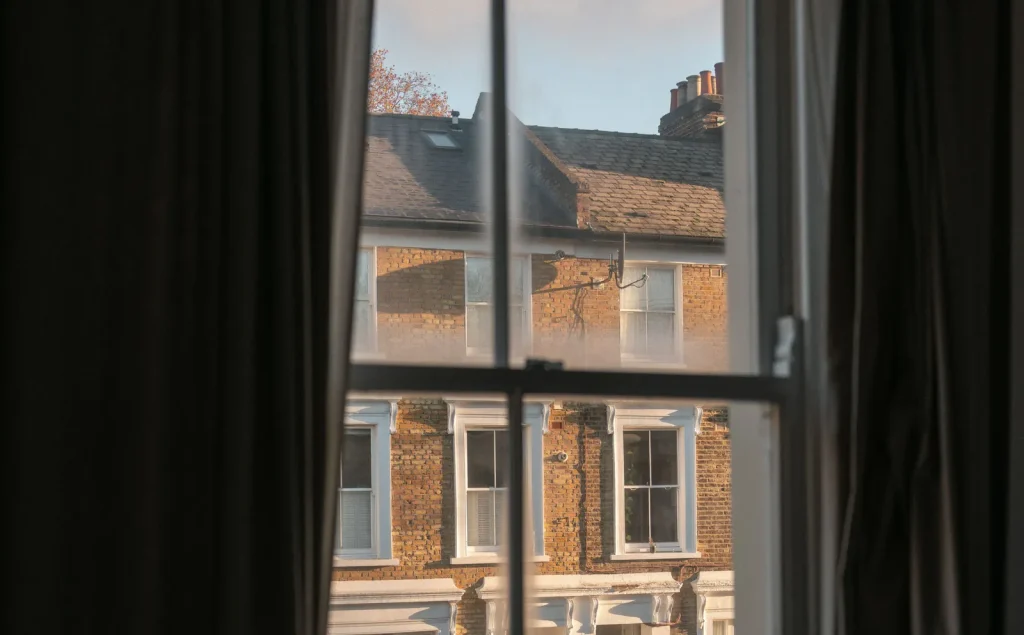
Designing secondary glazing that respects a historic window
- Follow the lines of the original. Keep the secondary glazing plain, with any divisions lining up with the main divisions of the window. For a sash window, that means lining up the meeting rails. Vertical sliding secondary glazing is designed for this.
- Keep frames slim and discreet. Slim aluminium sections are much less visible from outside than a second set of glazing bars.
- Choose a sympathetic colour. Our aluminium frames come in white, cream, anthracite grey, black and Van Dyke brown. Slim aluminium secondary glazing is commonly chosen for listed buildings because the frames can sit discreetly inside the window reveal, and a well-chosen colour helps them blend with the original windows.
- Keep fixings minimal and reversible. Fix into the window frame or painted reveal where possible rather than into stone or brick, so that holes can be filled and redecorated if the glazing is ever removed.
- Protect shutters. Position the secondary glazing so that working shutters can still be used.
Choosing the right type for a listed building
Vertical sliders suit sash windows. Horizontal sliders and hinged casements suit wider or casement windows. Lift-out and fixed panels are the least visible option for windows that rarely or never open. Historic England’s advice also notes that where permanent secondary glazing is not acceptable, removable secondary glazing used seasonally is generally acceptable, which makes lift-out panels worth considering. Our secondary glazing for sash windows guide covers sash-specific details.
What you can expect to gain
Historic England describes secondary glazing as a low-risk intervention that can deliver long-term energy and carbon savings. Its research found that secondary glazing can reduce heat loss as effectively as double glazing, particularly with low-emissivity glass, and is even better at reducing noise. For noisy locations, see our acoustic secondary glazing guide.
Getting a price
Our five aluminium styles have instant online guide prices including VAT, confirmed by a formal quote before anything is made. See the secondary glazing cost guide for what affects price, follow our measuring guide, or request a quote.